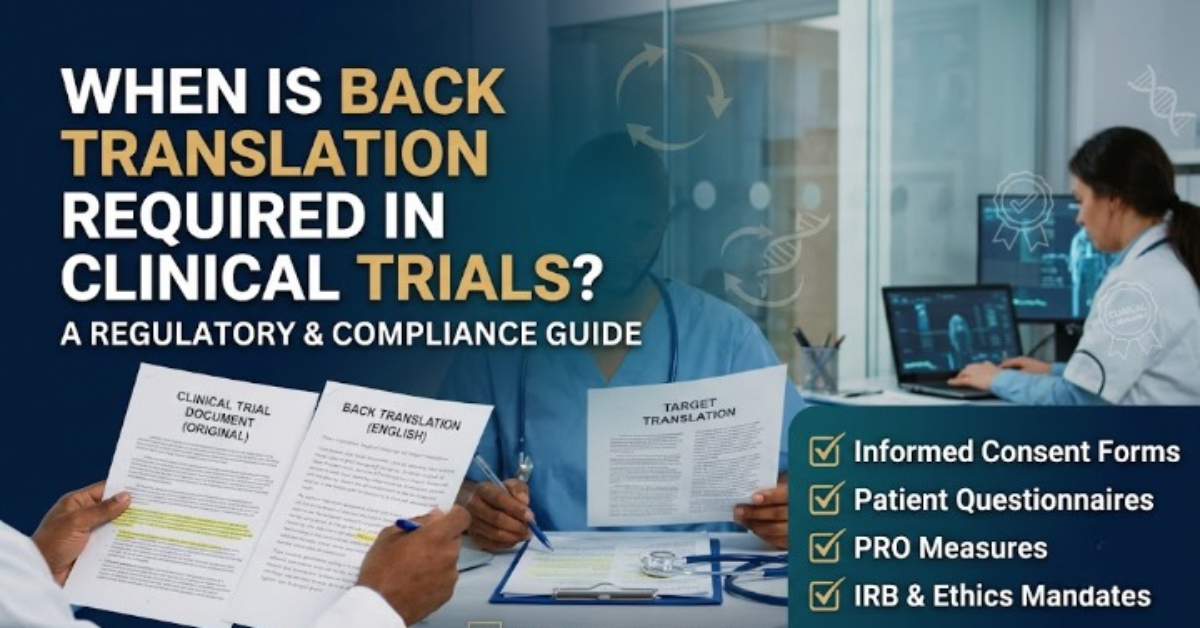
When Is Back Translation Required in Clinical Trials? A Regulatory & Compliance Guide
Clinical trials often involve participants across multiple countries and language groups. To support informed consent, participant safety, and reliable data collection, clinical trial documents must communicate the intended information clearly and accurately in every required language.
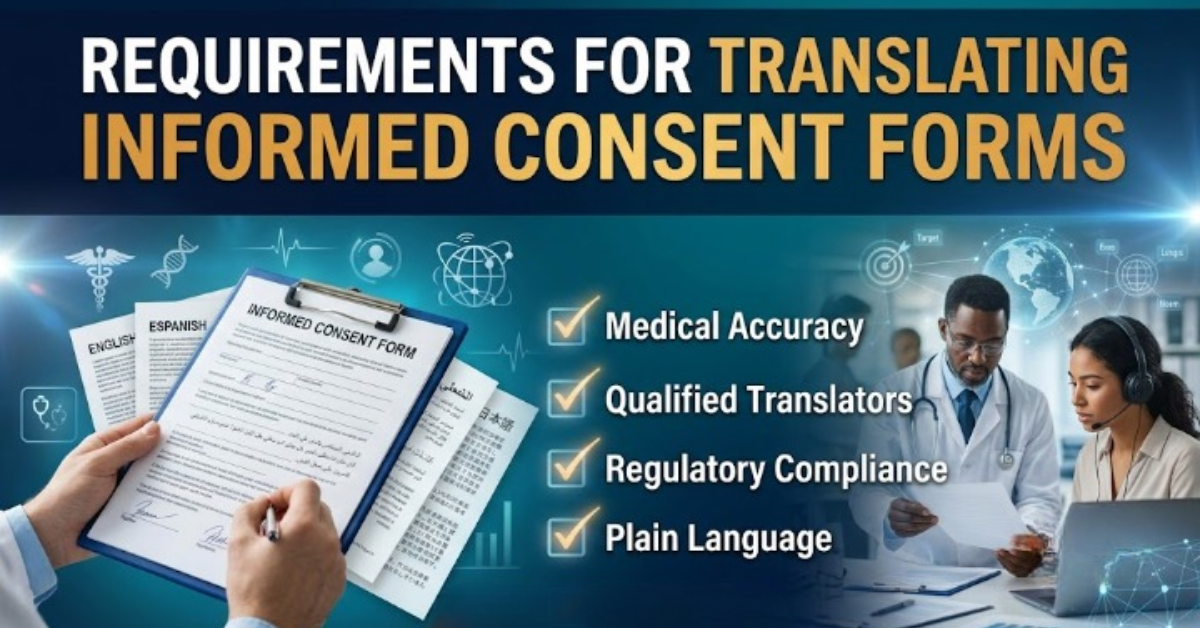
What Are the Requirements for Translating Informed Consent Forms?
Translating informed consent forms for clinical trials requires medical accuracy, qualified translators, clear and culturally appropriate language, confidentiality safeguards, and thorough quality checks. The translation must preserve essential information about study procedures, potential risks and benefits, participant rights, and voluntary participation. Depending on the study and applicable regulations, the translated form may also require review and approval by an Institutional Review Board
KOL Interview Transcription: A Complete Guide for Pharmaceutical and Life Sciences Research
Key Opinion Leaders (KOLs) play an important role in pharmaceutical and life sciences research by sharing their expertise on clinical practice, treatment approaches, healthcare challenges, and emerging medical developments. Interviews with physicians, clinical researchers, healthcare professionals, and other subject-matter experts help research teams understand clinical perspectives and gather valuable qualitative insights.
10 Questions to Ask Before Choosing a Pharmaceutical Translation Company
Choosing the right pharmaceutical translation company is essential for communicating clinical, scientific, regulatory, and drug-related information accurately across languages. The right provider should offer relevant pharmaceutical expertise, a documented quality assurance process, appropriate confidentiality safeguards, and experience with your specific document types and target markets.

Is AI Transcription HIPAA & GDPR Compliant? A Complete Healthcare Guide
AI transcription is transforming healthcare documentation by converting medical conversations, clinician dictations, and recorded consultations into written text. While these tools can help healthcare organizations streamline documentation, they also raise important questions about patient privacy, data security, and regulatory compliance.
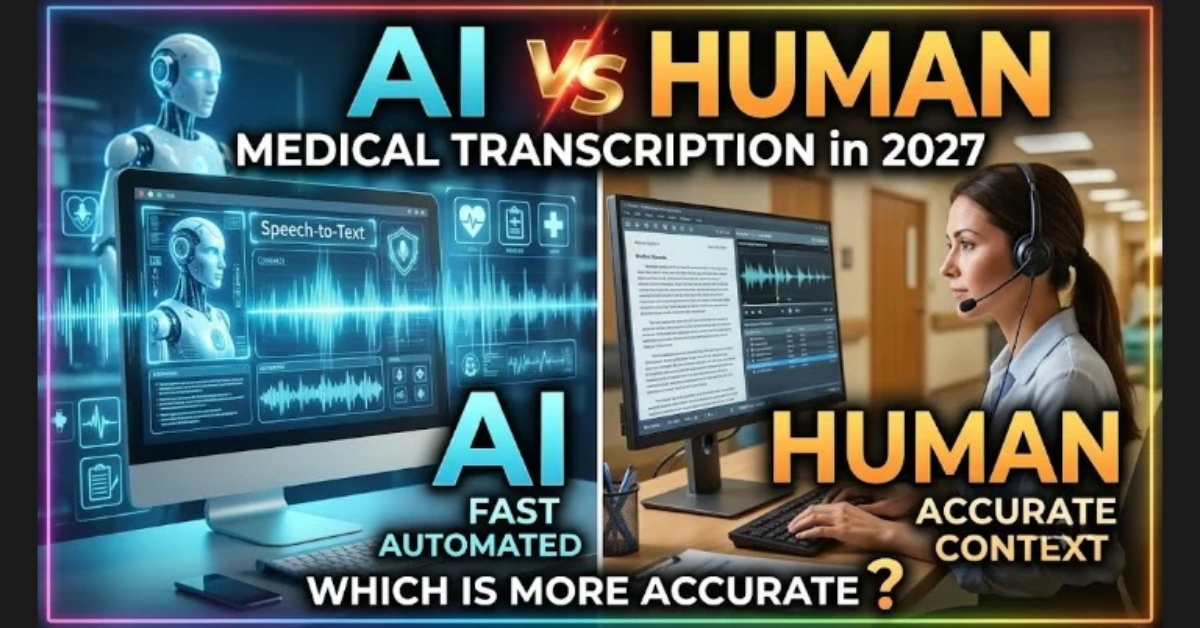
AI vs. Human Medical Transcription: Which Is More Accurate in 2027?
Medical transcription plays an important role in converting doctor-patient conversations, clinical dictations, and healthcare recordings into written documentation. Accurate transcripts help healthcare professionals maintain patient records, review medical histories, and support clinical communication.
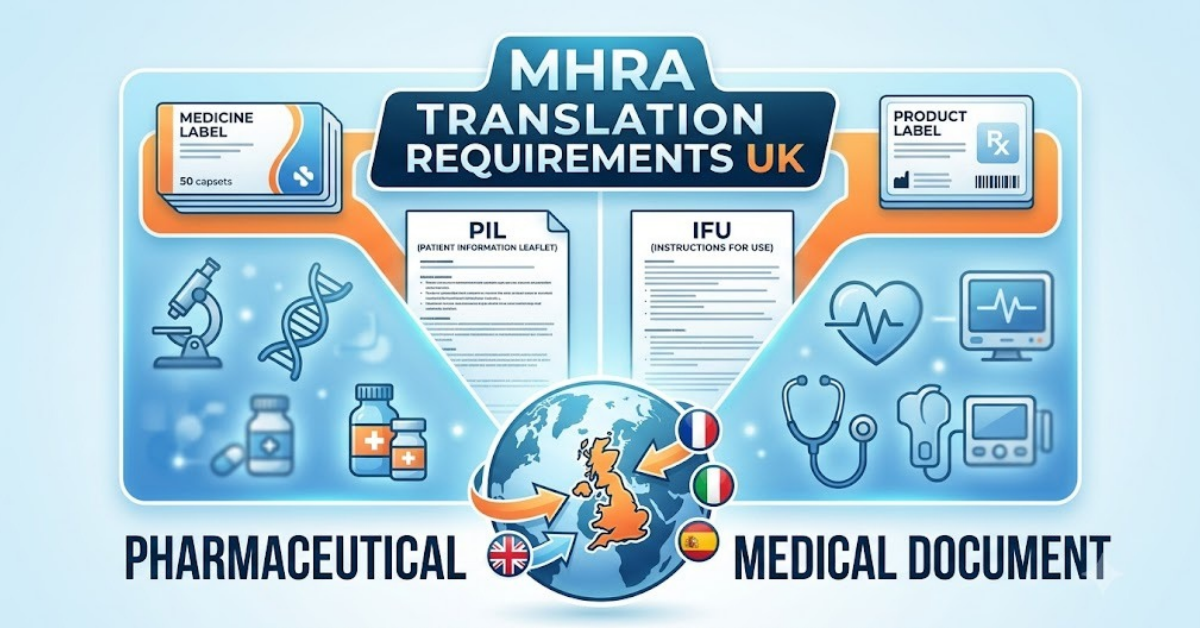
MHRA Translation Requirements UK: Pharmaceutical & Medical Document Translation Guide
MHRA translation requirements refer broadly to the need for regulated healthcare information to be accurate, clear, consistent and appropriate for its intended audience.
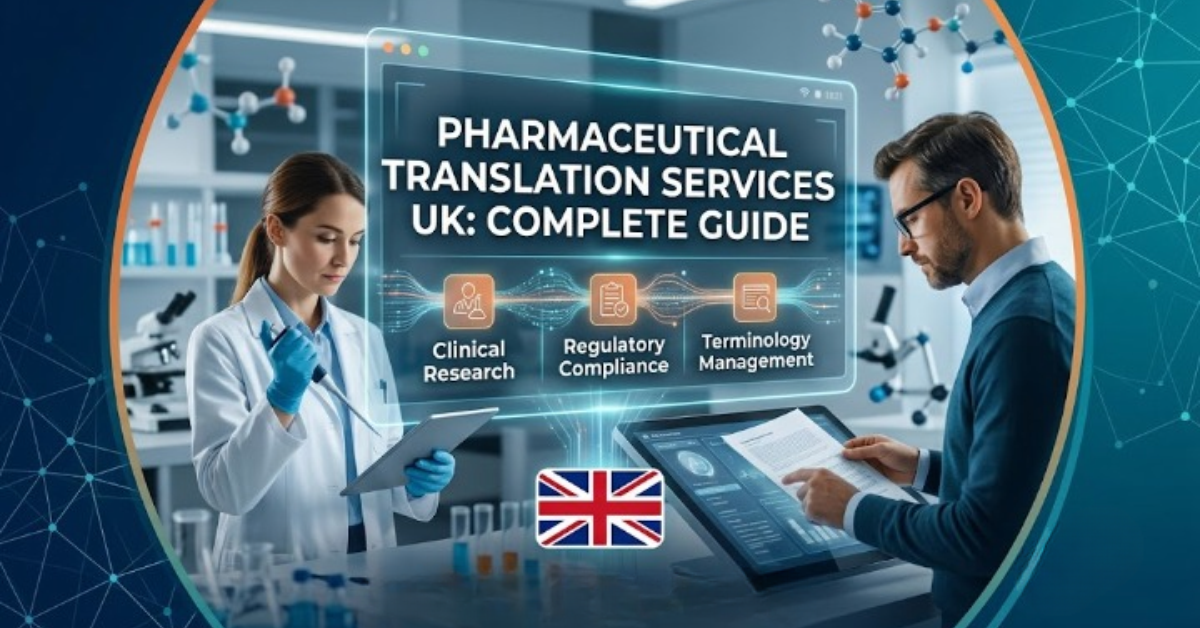
Pharmaceutical Translation Services UK: Complete Guide to Pharma, Clinical & Regulatory Translation
Pharmaceutical translation services UK help pharmaceutical, biotechnology, clinical research and life sciences organisations communicate important information accurately across languages and markets. Unlike general business translation, pharmaceutical translation requires specialist knowledge of clinical, scientific, medical, and regulatory terminology.
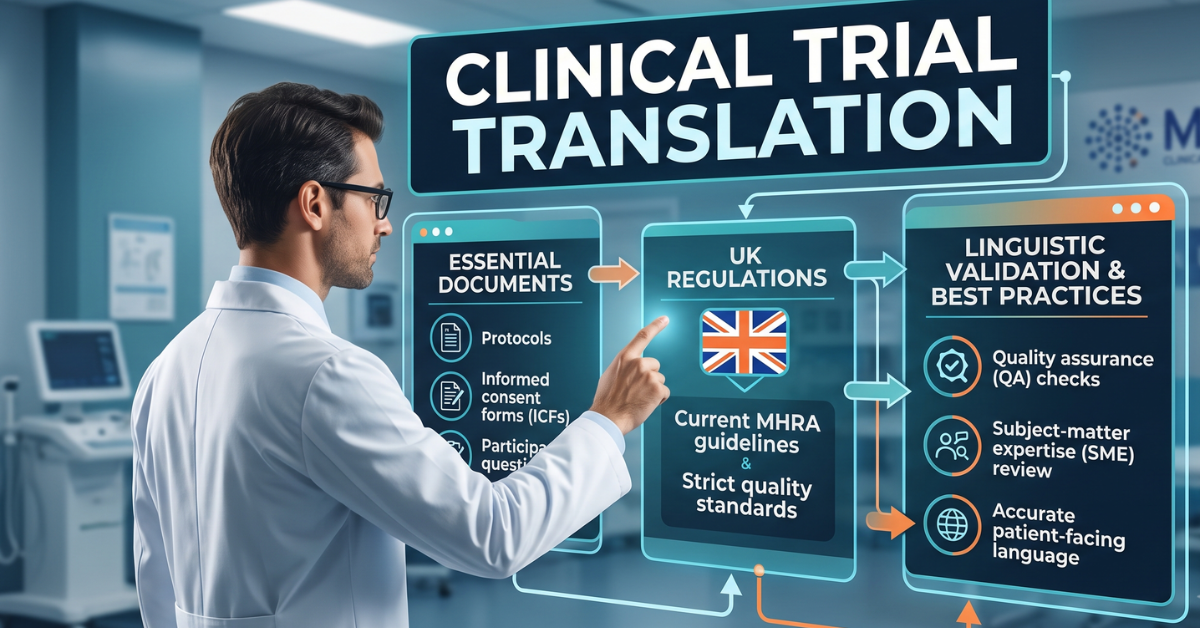
Clinical Trial Translation UK: Documents, Regulations, Linguistic Validation & Best Practices
Clinical trial translation is the specialised translation of documents and participant-facing materials used during clinical research. These materials can include clinical trial protocols, informed consent forms, patient information sheets, questionnaires, recruitment materials, investigator documentation and study instructions.
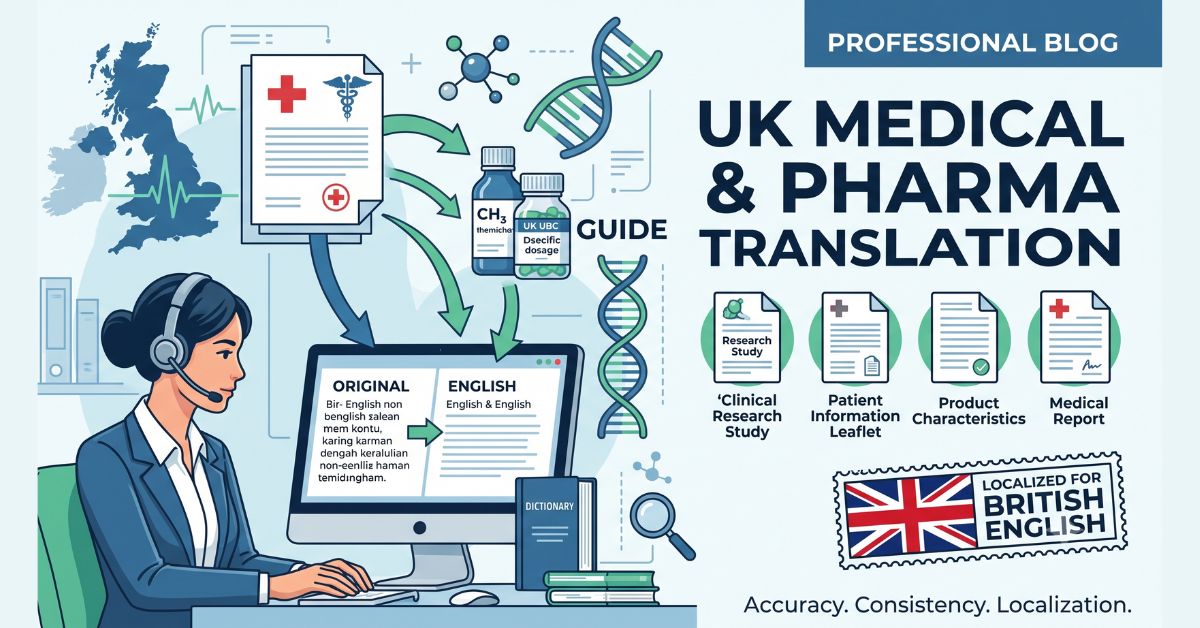
How to Translate Medical & Pharmaceutical Documents for the UK Market: A Practical Guide
Medical and pharmaceutical document translation requires far more than converting words from one language into another. Healthcare content often contains specialist terminology, clinical information, pharmaceutical names, dosage instructions, technical details, and patient-facing information where accuracy and consistency are essential.
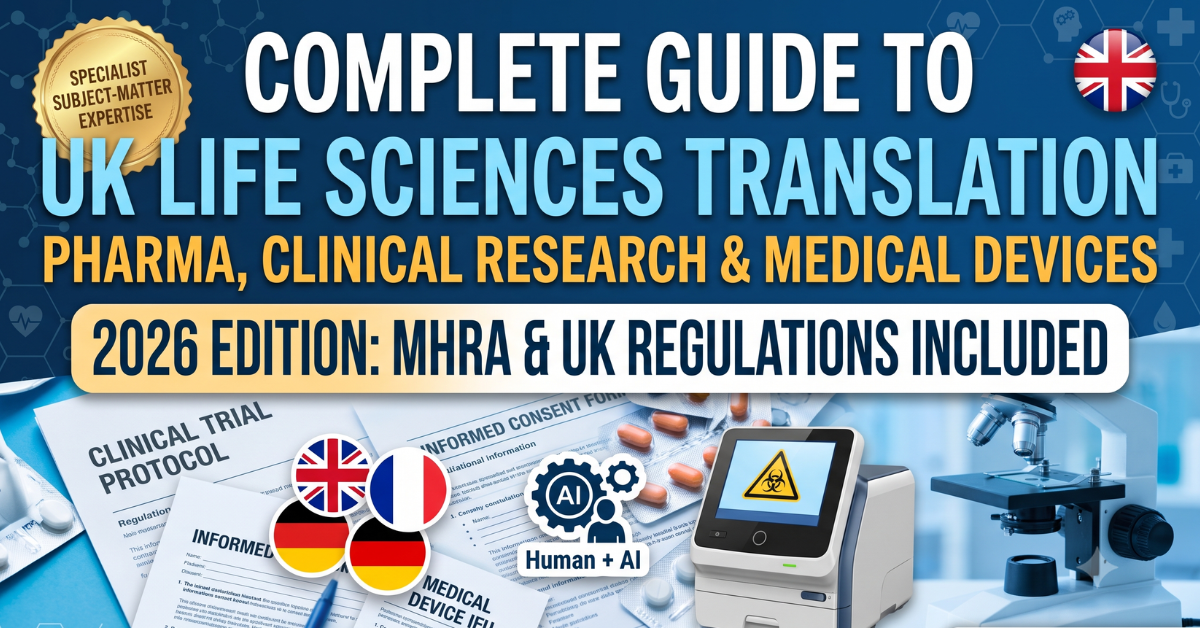
UK Life Sciences Translation: Pharma, Clinical Research & Medical Device Translation Guide
Life sciences translation services UK providers help organisations translate highly specialised scientific, medical, technical and regulatory content while preserving terminology, meaning, accuracy and consistency.
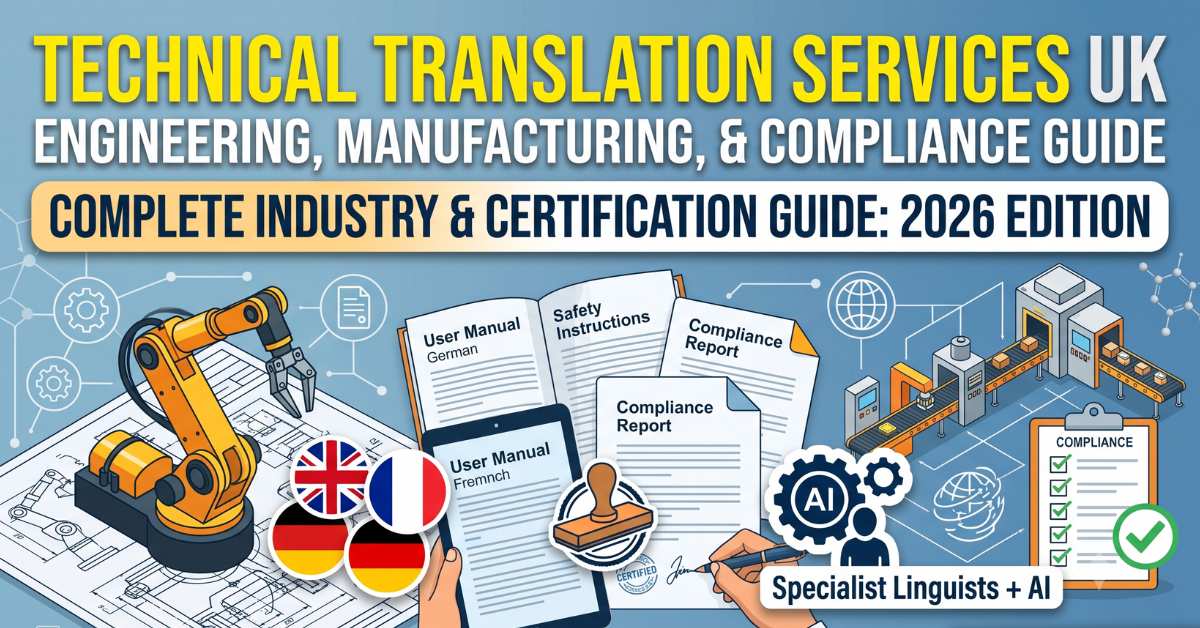
Technical Translation Services UK: A Complete Guide to Documents, Industries & Certification
Technical translation services UK help businesses translate complex documents while preserving technical terminology, meaning, instructions, formatting, and industry-specific information. These services are widely used in engineering, manufacturing, pharmaceuticals, healthcare, technology, scientific research, and other specialist sectors.