Expanding into international markets requires more than simply translating words from one language to another. Businesses entering the Italian market in 2026 need communication that is accurate, culturally appropriate, legally compliant, and aligned with local customer expectations. Professional English to Italian translation services help organizations build trust, improve customer engagement, and avoid costly communication mistakes.
Italy remains one of Europe's most influential economies, with strong sectors in manufacturing, healthcare, fashion, finance, tourism, legal services, and e-commerce. Whether a company is localizing a website, translating contracts, adapting marketing campaigns, or supporting multilingual customer communication, high-quality Italian translation has become essential for global business growth.
This guide explains everything businesses need to know about English to Italian translation services in 2026, including localization, costs, industry applications, certified translation, human vs AI translation, and how to choose the right translation partner.
What Are English to Italian Translation Services?
English to Italian translation services involve converting English-language content into accurate, natural, and culturally appropriate Italian for business, legal, technical, healthcare, financial, and marketing purposes.
Professional translation services typically include:
- Document translation
- Website localization
- Marketing translation
- Legal translation
- Technical translation
- Certified translation
- Multimedia localization
- Business communication translation
- Market research translation
Unlike automated translation tools, professional services focus on preserving meaning, tone, context, and industry terminology while adapting content for Italian-speaking audiences.
Why English to Italian Translation Matters for Businesses?
Businesses expanding internationally cannot afford communication errors that damage credibility or customer trust. Poorly translated content often leads to misunderstandings, reduced conversions, compliance risks, and reputational harm.
Professional Italian translation services help businesses:
- Build trust with Italian-speaking customers
- Improve international customer experience
- Increase website conversion rates
- Ensure legal and regulatory compliance
- Strengthen global brand reputation
- Support multilingual customer service
- Improve communication with international partners
Consumers are significantly more likely to engage with brands that communicate in their native language. In competitive international markets, localization is no longer optional — it is a core business strategy.
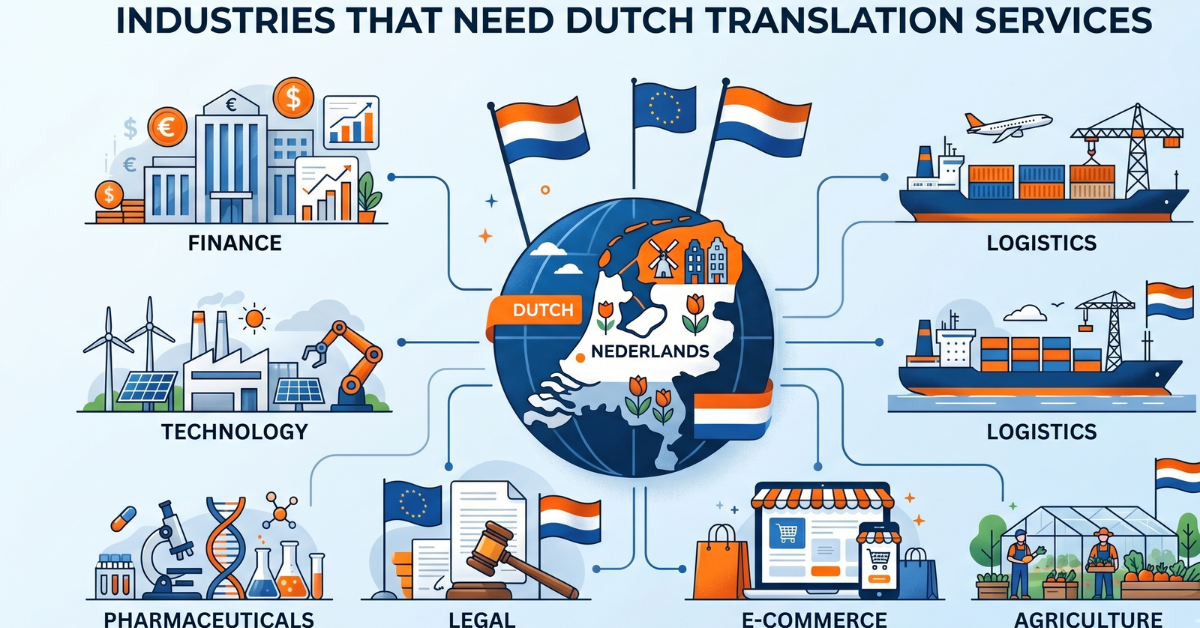
Industries That Commonly Use Italian Translation Services
Many industries require specialized Italian translation because technical terminology, regulations, and communication standards vary significantly between sectors.
Legal Translation
Legal translation requires exceptional precision because even small wording errors can affect compliance or contractual interpretation.
Common legal documents include:
- Contracts
- NDAs
- Court documents
- Immigration paperwork
- Compliance documentation
- Intellectual property agreements
Professional legal translators understand Italian legal terminology and regional regulatory requirements.
Healthcare & Medical Translation
Healthcare translation requires both linguistic accuracy and subject-matter expertise.
Common healthcare materials include:
- Clinical research reports
- Medical records
- Pharmaceutical documentation
- Patient information leaflets
- Medical device manuals
Medical translation errors can create serious compliance and safety risks, making human review essential.
Financial Translation
Financial organizations frequently translate:
- Audit reports
- Annual reports
- Investment documentation
- Insurance documents
- Banking materials
- Tax documentation
Financial translation requires consistent terminology and a strong understanding of international business regulations.
E-commerce & Retail Localization
Italian localization helps e-commerce businesses improve customer engagement and increase conversions.
Common localization projects include:
- Product descriptions
- Checkout experiences
- SEO content
- Customer emails
- Mobile apps
- User interfaces
Localized e-commerce content feels more natural to Italian consumers and improves buyer confidence.
Manufacturing & Technical Translation
Technical industries rely heavily on accurate terminology and structured communication.
Technical translation often includes:
- Equipment manuals
- Safety documentation
- Engineering specifications
- Product documentation
- Training materials
Professional translators with technical expertise help ensure accuracy and operational clarity.
Translation vs Localization: What's the Difference?
Many businesses confuse translation and localization, but they serve different purposes.
| Translation | Localization |
| Converts text from one language to another | Adapts content for a local audience |
| Focuses on linguistic accuracy | Focuses on cultural relevance |
| Maintains original meaning | Adapts tone, messaging, and context |
| Often used for documents | Commonly used for websites and marketing |
Localization may involve adapting:
- Currency formats
- Cultural references
- Date formatting
- Tone of voice
- Visual elements
- Consumer messaging
- SEO keywords for local search behavior
Businesses entering the Italian market often need both translation and localization to communicate effectively.
Why Human Translators Still Matter in 2026?
Artificial intelligence has transformed the translation industry, but AI alone still struggles with:
- Cultural nuance
- Industry terminology
- Brand tone
- Contextual interpretation
- Legal precision
- Emotional messaging
AI-generated translations frequently miss subtle language details that influence customer trust and business credibility.
Human translators provide:
- Contextual understanding
- Industry specialization
- Cultural adaptation
- Terminology consistency
- Quality assurance
- Localization expertise
Many professional translation providers now use AI-assisted workflows combined with human editing and proofreading to improve efficiency without sacrificing quality.
Common Business Documents Translated Into Italian
Modern organizations translate a wide variety of materials when operating internationally.
Frequently translated business content includes:
- Contracts and agreements
- Employee handbooks
- Training documents
- Financial statements
- Research reports
- Product manuals
- Websites
- Marketing materials
- Customer support content
- Compliance documents
- Healthcare reports
- Technical documentation
Each document type requires a tailored translation approach based on industry standards and audience expectations.
How Professional Translation Workflows Operate
High-quality translation involves much more than simple language conversion.
A professional English to Italian translation workflow typically includes:
1. Project Assessment
Content is reviewed for complexity, terminology, industry requirements, and localization needs.
2. Translator Assignment
Projects are assigned to native Italian linguists with subject-matter expertise.
3. Translation Phase
The content is translated while maintaining tone, accuracy, and terminology consistency.
4. Editing & Proofreading
A second linguist reviews the content for clarity, grammar, and accuracy.
5. Localization & QA
Content is adapted for the Italian market and checked for cultural relevance and formatting consistency.
6. Final Delivery
The finalized translation undergoes quality assurance before delivery.
This multi-step process helps ensure professional-grade results.
How Much Do English to Italian Translation Services Cost in 2026?
Translation pricing varies depending on several factors.
Common pricing considerations include:
- Word count
- Technical complexity
- Turnaround time
- Industry specialization
- Certification requirements
- Formatting needs
- Localization scope
Average Translation Pricing in 2026
| Service Type | Estimated Cost |
| Standard business translation | $0.08–$0.15 per word |
| Technical translation | $0.12–$0.22 per word |
| Legal translation | $0.15–$0.25 per word |
| Certified translation | Higher fixed or per-page fees |
Businesses should prioritize quality and expertise rather than selecting providers solely based on the lowest price.
What Businesses Should Look for in a Translation Partner?
Choosing the right translation company is critical for long-term international success.
Important factors include:
1. Native Italian Linguists
Native speakers provide more natural and culturally accurate communication.
2. Industry Expertise
Specialized translators understand technical terminology and compliance requirements.
3. Human Quality Assurance
Multi-stage proofreading and editing improve translation reliability.
4. Confidentiality & Security
Businesses should verify secure handling of sensitive documents and GDPR-aware workflows.
5. Scalability
The provider should support growing multilingual business needs.
6. Localization Capabilities
Translation alone is often insufficient for customer-facing content.
SEO and Multilingual Content Localization
Businesses translating websites into Italian should also optimize for multilingual SEO.
Italian localization SEO may include:
- Local keyword research
- Italian metadata optimization
- URL localization
- Localized content structure
- Italian search intent optimization
Directly translating English keywords rarely delivers strong SEO performance in international search engines.
Benefits of Professional English to Italian Translation Services
Businesses investing in professional translation gain several advantages:
- Stronger customer trust
- Better global brand perception
- Improved international SEO visibility
- Higher engagement rates
- Reduced legal and compliance risks
- Better multilingual communication
- More effective market expansion
Professional localization helps businesses appear credible and trustworthy in international markets.
Why Businesses Choose MyTranscriptionPlace?
MyTranscriptionPlace provides professional English to Italian translation services designed for modern global businesses.
Our services support:
- Website localization
- Business document translation
- Legal translation
- Healthcare translation
- Market research translation
- Customer communication localization
- Technical translation
We combine native Italian linguists, industry expertise, human quality assurance, and localization strategies to help businesses communicate naturally and professionally with Italian-speaking audiences.
Final Thoughts
As international business expansion accelerates in 2026, professional English to Italian translation services have become essential for organizations seeking sustainable global growth. Businesses that invest in accurate translation and localization can build stronger customer relationships, improve multilingual communication, increase international credibility, and reduce operational risk.
Professional human translation supported by localization expertise ensures that content not only reads correctly in Italian, but also resonates naturally with local audiences. Whether translating legal contracts, healthcare documents, websites, or marketing campaigns, businesses that prioritize quality communication are better positioned to succeed in the Italian market and beyond.
Best Translation Services
English to Indonesian Translation | English to Spanish Translation | English to Italian Translation | English to Russian Translation | English to Danish Translation | English to Vietnamese Translation | English to Japanese Translation | English to Finnish Translation | English to Dutch Translation | English to Arabic Translation | English to Norwegian Translation | English to Greek Translation.
Frequently Asked Questions
1. What is the difference between translation and localization?
Translation converts content from one language into another, while localization adapts content for the cultural expectations, communication style, and preferences of a specific audience.
2. Do businesses need certified English to Italian translation?
Certified translation is often required for legal, immigration, healthcare, academic, and government-related documents. Requirements vary depending on the institution or country.
3. How long does English to Italian translation take?
Turnaround time depends on document complexity, word count, technical requirements, and review processes. Smaller projects may take a few days, while larger technical or legal projects may require more time.
4. Can AI replace human translators?
AI translation tools can assist with speed and workflow efficiency, but human translators remain essential for cultural accuracy, contextual understanding, industry terminology, and quality assurance.
5. What types of documents are commonly translated into Italian?
Businesses frequently translate contracts, websites, marketing materials, product documentation, financial reports, healthcare documents, employee manuals, and customer communications.

Nishi Singh
(Content Writer & SEO Manager)
She is an SEO Manager with over 8 years of experience in marketing and content creation. She specializes in SEO, content strategy, and paid advertisements, helping website owners across SaaS, B2B businesses, and e-commerce platforms achieve measurable growth. With a strong focus on driving organic traffic and crafting impactful content, Nishi has established herself as a trusted expert in the digital marketing space. When she's not optimizing websites, she channels her energy into marathon running, embracing challenges both on and off the track.